South African startup breeds local hemp seed for a textile industry
Green Route is reimagining hemp as a commercial fibre crop, breeding varieties suited to local conditions.
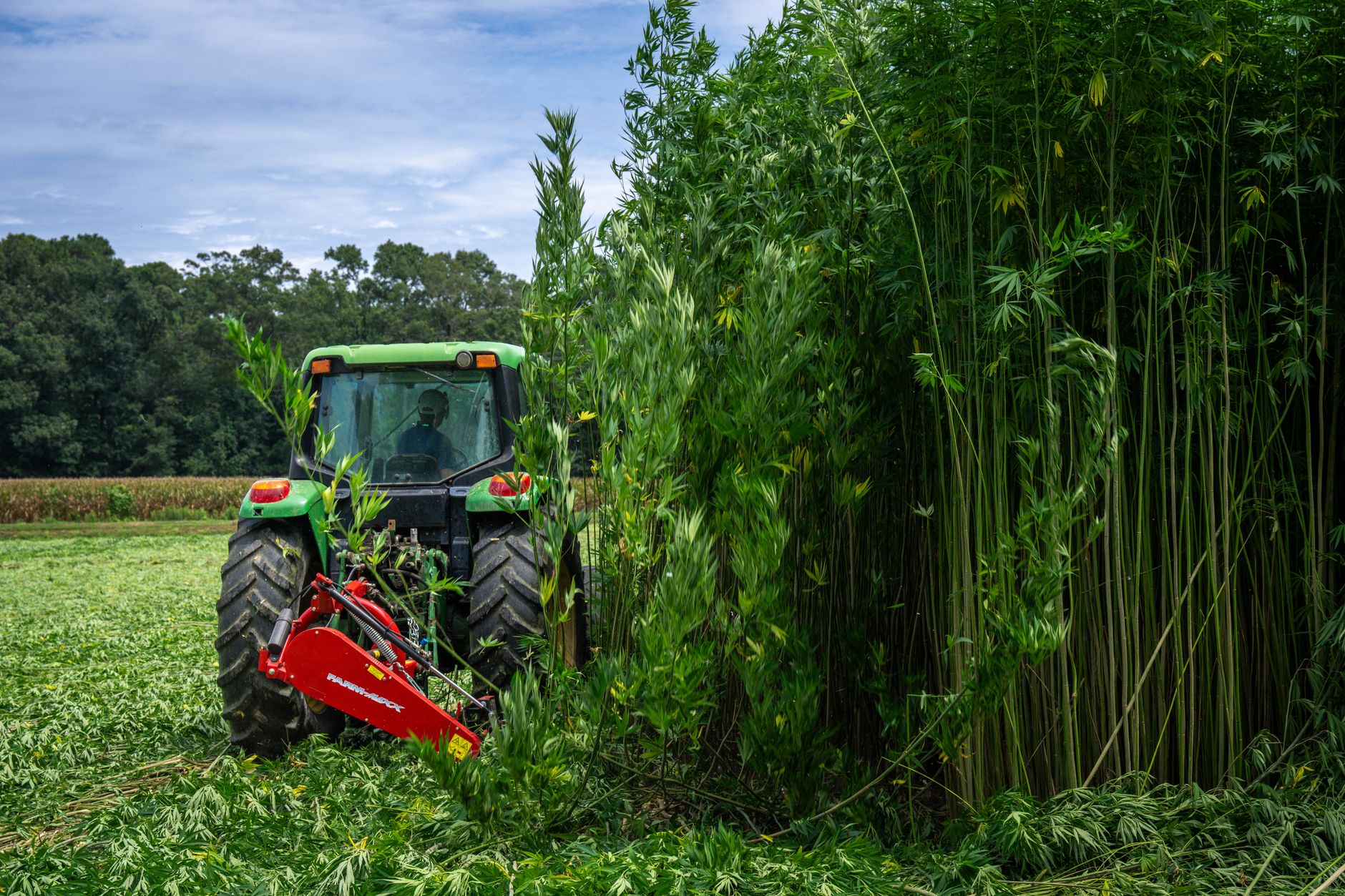
A South African startup, Green Route, is working to establish hemp as a commercial textile crop, breeding local seed varieties intended to support domestic manufacturing and create sustainable jobs.
The seed-breeding focus is the substantive part of the venture. Industrial hemp performs very differently depending on latitude, because the plant's flowering is triggered by day length. A variety bred for European conditions will flower at the wrong point in the South African season, producing short plants and poor fibre yield. Developing locally adapted seed is therefore a precondition for a viable industry, not an optimisation.
The commercial case rests on the crop's agronomy. Hemp grows quickly, requires comparatively little water relative to cotton, and needs few pesticide applications because its canopy closes fast enough to suppress weeds. For a water-constrained country, the comparison with cotton is the relevant one.
A South African startup, Green Route, is working to establish hemp as a commercial textile crop, breeding local seed varieties intended to support domestic manufacturing and create sustainable jobs.
The obstacles are downstream. Turning hemp stalk into textile fibre requires decortication and processing capacity that South Africa largely lacks, and building that capacity requires assured volumes, which in turn require growers to plant before the processing exists. Breaking that circularity is the central difficulty for any new fibre crop.
Regulatory classification has historically been the other constraint, since industrial hemp shares a species with cannabis and has often been governed by the same controls despite its negligible psychoactive content.
Based on reporting by Daily Maverick.